
I was led back to the recovery room to see my 25-year-old daughter, Haley, who was just starting to rouse after having a pacemaker implanted.
When I saw Haley, the tension I had been carrying around all day seemed to ease. As I approached her bed, I was introduced to the nurse that was tending to her. Since only one person could be in recovery with the patient, her dad, Jeff, and Haley’s twin brother, Ryan, stayed back in the waiting room. I knew it was the right choice when the nurse said, “All Haley has been asking for is to see her mom.” I went to Haley’s side, gently stroked her head, and told her I was there. She said, “I love you, Mommy.” My adult daughter, under the effects of anesthesia, reminded me that she will always be my little girl. I felt tears well up and realized it was the first time I allowed myself to show any emotion that day.
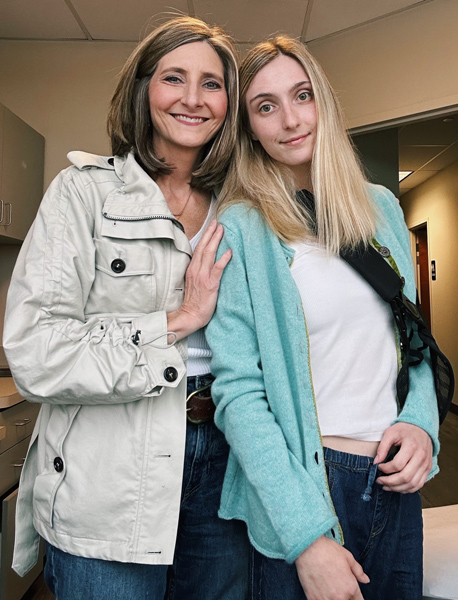 Haley wasn’t unhappy about getting the pacemaker. To be honest, she was advocating for it after her diagnosis of sick sinus syndrome and learning about how a pacemaker could help improve her quality of life. After living with a major setback in her chronic illness the past three years, she decided the risk was worth the possible reward. That didn’t mean that she didn’t also feel anxious about the whole thing. In fact, she had a lot of concerns, particularly about how she was going to feel waking up after the procedure.
Some people, like me, have adverse reactions to anesthesia and pain medications. My dad passed the trait down to me and I, in turn, gifted it to Haley. The thought of waking up nauseous added to Haley’s anxiety about the safety of the surgery and how the pacemaker would (or maybe wouldn’t) change her life. During pre-op, Haley met the anesthesiologist and went through her list of demands … I mean, questions and concerns. “Can you make sure that I have anti-nausea medication when I wake up? I don’t want any narcotics, just ibuprofen. I’m afraid of waking up during surgery and not being able to move. Can you please give me a warning before you give me the anesthesia because it makes my vertigo really bad and I want to be prepared … If I object you can go ahead and just do it, though” The list went on, and the doctor patiently answered her questions, addressed her concerns, and modified the plan, where able, to include her requests.
Haley became increasingly nervous the closer it got to her scheduled surgery time. Ryan pulled out his signature sense of humor and lightened her load in a way only a twin brother could. As Haley was wheeled away, though, tears fell from her eyes. We all wished we could follow her but knew we had to let her go. We prayed she was in good hands.
As I held Haley’s hand in the recovery room, she continued to loop through a series of questions and statements, quickly forgetting what she had said just moments before. When the nurse brought her ginger ale, she said, “thank you kind lady.” The “kind lady” continued to answer Haley’s questions repeatedly, never revealing if she was even the slightest bit annoyed. The anesthesiologist stopped by to check on Haley and, when he left, Haley said, “The anesthesiologist was such a nice man,” on repeat. I agreed that he had been very patient, putting her more at ease before the procedure. I didn’t realize how much, though, until later that night when Haley was coherent. Haley told us, “When I went into the operating room I was really scared. I started to cry and said that I was nervous, and the anesthesiologist and one of the nurses each took one of my hands and held them until it was time to start.” Feelings of gratitude and relief washed over me, and I could no longer hold back my own tears that I had been trying so hard to suppress that day.
A patient post-op nurse, a kind surgical nurse, and a caring anesthesiologist all brought comfort to a frightened young woman when her family couldn’t be with her. They cared for her the way we would have and, in bringing her comfort, brought it to us retrospectively. When Haley was wheeled away, we were hoping the pacemaker surgery would go well. Our hopes were realized - we had left her in good hands; we didn’t know at the time just how well they would be tending to her heart. And, if they all took that good care of her feelings, I could only imagine the great care they took in their roles as practitioners of medicine.