
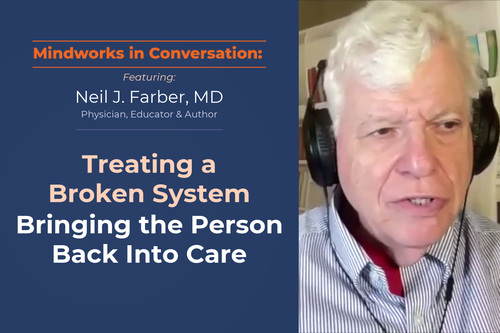
Physician and author Neil J. Farber joins Tony Errichetti to discuss how his experiences as a doctor, caregiver, and patient shaped his call for a more humane healthcare system, and why listening, curiosity, and time with patients matter.
Insights – Snapshot Stories
Meet members making a global impact through narrative healing and support initiatives.

When Terry Miller imagined cancer cells as campers hiking through her body and setting up campsites, she turned to her daughter, Amanda Erin Miller, and asked: “Wouldn’t that be a funny sketch?”
That question became Quacks & Whacks: A Cancer Comedy, a mother-daughter collaboration about illness, the absurdity of the American healthcare system, and the ways humor can help people face what is difficult. Amanda will bring the show back to Caveat in New York on September 13, followed by a patient advocacy panel, in memory of Terry.

Narrative Mindworks spoke with clinical psychologist, poet, and musician Carol Moog, PhD, about anger, creativity, and the different ways we learn to understand and express ourselves.

In this Snapshot Story, Stephanie Goldklang traces the roots of her comedy, caregiving perspective, and Narrative Medicine practice back to two people who shaped her most: her brother Jonathan and a young poet named Mattie.

Narrative Mindworks spoke with Jackie Quan, founder of JQ Consulting LLC, about mindfulness, resilience, emotional regulation, and what it takes for individuals and teams to truly thrive.

Narrative Mindworks spoke with physician and author Shanda McManus about Brother Epistles, her intimate address to her younger brother Monir, who was murdered in North Philadelphia in 1992.
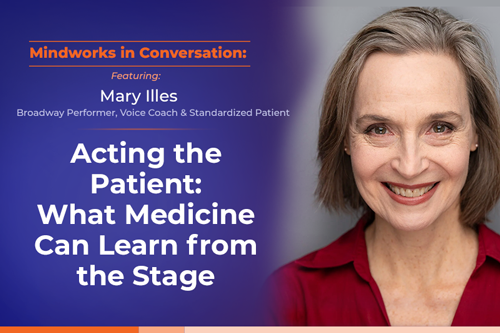
In this Mindworks in Conversation episode, Broadway performer, voice coach, and standardized patient Mary Illes explores the intersection of performance art and medical education. Drawing from her experience on stage and in clinical simulation, Illes reflects on how artistic skills such as voice, physical presence, emotional authenticity, and improvisation can help medical students become more aware, responsive, and human-centered in patient encounters.

In this Mindworks in Conversation episode, nurse leader, executive coach, and healthcare educator Jeannine Acantilado explores the powerful role storytelling plays in healthcare, leadership, and emotional well-being.
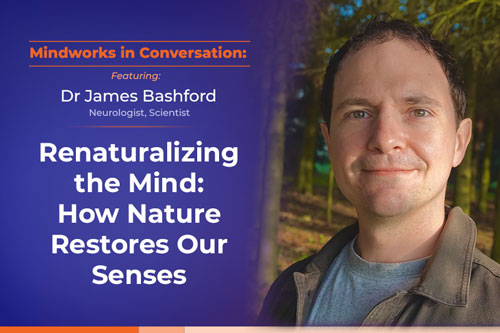
Mindworks in Conversation w James Bashford | Renaturalizing the Mind: How Nature Restores Our Senses
Is nature the ultimate "reset button" for the human brain? In this episode of Mindworks in Conversation, we sit down with neurologist and author James Bashford, MRCP, PhD, to discuss his groundbreaking work, Nature Within: How the Natural World Shapes Our Minds, Bodies & Health.
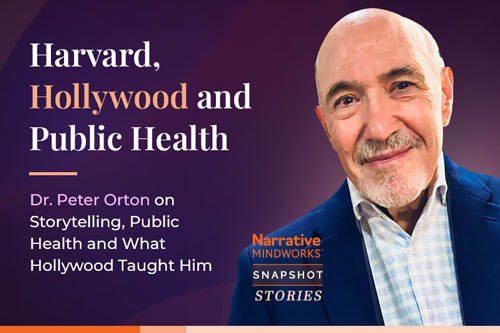
Dr. Peter Orton’s career has spanned Hollywood, Harvard, IBM, and public health. Through it all runs a single through line: storytelling as a tool for connection, learning, and impact.

NARRATIVE MINDWORKS | 1216 Broadway 2nd fl. New York NY 10001
© 2026 Narrative Mindworks. All Rights Reserved.
Terms of Use | Privacy Policy | Copyright Policy | Accessibility Statement
© 2026 Narrative Mindworks. All Rights Reserved.
Terms of Use | Privacy Policy | Copyright Policy | Accessibility Statement