
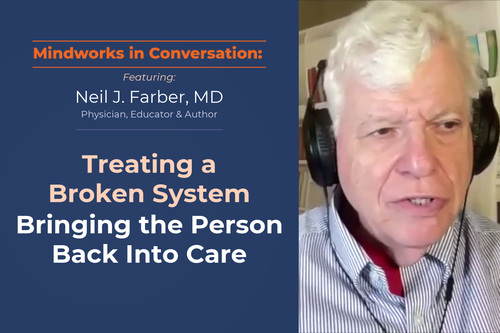
Physician and author Neil J. Farber joins Tony Errichetti to discuss how his experiences as a doctor, caregiver, and patient shaped his call for a more humane healthcare system, and why listening, curiosity, and time with patients matter.
Insights, Highlights & Mindworks Chats
Go deeper into the essence of narrative practices with our insights, deep dives, in-depth stories, happenings and chats

More than 150 clinicians, educators, and staff gathered for Advocate Health’s 12th Annual Narrative Medicine Conference, exploring how story meets care.

When Terry Miller imagined cancer cells as campers hiking through her body and setting up campsites, she turned to her daughter, Amanda Erin Miller, and asked: “Wouldn’t that be a funny sketch?”
That question became Quacks & Whacks: A Cancer Comedy, a mother-daughter collaboration about illness, the absurdity of the American healthcare system, and the ways humor can help people face what is difficult. Amanda will bring the show back to Caveat in New York on September 13, followed by a patient advocacy panel, in memory of Terry.

Narrative Mindworks spoke with clinical psychologist, poet, and musician Carol Moog, PhD, about anger, creativity, and the different ways we learn to understand and express ourselves.

In this Snapshot Story, Stephanie Goldklang traces the roots of her comedy, caregiving perspective, and Narrative Medicine practice back to two people who shaped her most: her brother Jonathan and a young poet named Mattie.

Narrative Mindworks spoke with Jackie Quan, founder of JQ Consulting LLC, about mindfulness, resilience, emotional regulation, and what it takes for individuals and teams to truly thrive.

Narrative Mindworks spoke with physician and author Shanda McManus about Brother Epistles, her intimate address to her younger brother Monir, who was murdered in North Philadelphia in 1992.

In this story from our Spirituality in Medicine series, Ryan McCarthy, MD, reflects on what it means to step into a patient’s moment with presence, curiosity, and care.

NARRATIVE MINDWORKS | 1216 Broadway 2nd fl. New York NY 10001
© 2026 Narrative Mindworks. All Rights Reserved.
Terms of Use | Privacy Policy | Copyright Policy | Accessibility Statement
© 2026 Narrative Mindworks. All Rights Reserved.
Terms of Use | Privacy Policy | Copyright Policy | Accessibility Statement