What if the right story could help a child feel less afraid of a diagnosis, understand a difficult treatment, or even find hope during a health crisis? Former Hollywood animator Tim Jones is using the power of cartoons, graphic novels, and narrative to make healthcare more understandable, emotionally safe, and human for children and families.
Forget the waiting room magazines and patient handouts. The latest prescription being written isn't for a pill or a procedure. It's for a story.

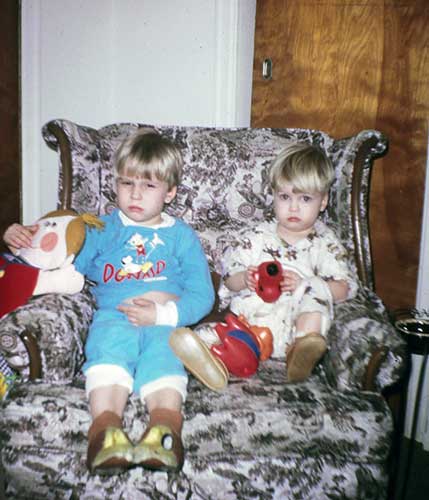
Caption: Tim (left) with his youngest brother. A serious child, he understands how animation can be the portal to helping children understand health challenges
Beginning his career in Hollywood working at studios including Warner Bros. and Disney, Tim Jones saw firsthand how animated blockbusters like The Lion King and South Park could stop kids and adults in their tracks, speak directly to their heart, and carry powerful messages that stayed with them long after the credits rolled. It was there he realized animation wasn't just entertainment. It was one of the most powerful communication tools in the world.
That insight led him somewhere unexpected: pediatric healthcare. Tim discovered that animated stories could reach children in ways that clinical language simply couldn't. Where a diagnosis created distance, a character created a bridge. Where a treatment plan felt frightening, a story felt like a friend.
In 2010, Tim partnered with Emmy® Award-winning animator Al Rosson and tech-savvy pediatrician Dr. Gregg Alexander to found Health Nuts Media with a singular mission: to help people better understand and manage their health.
Devoted health literacy champions, Tim and his team set out to solve the health literacy crisis and what they say is a significant "clinical communication gap." Only 12 percent of adults are proficient in health literacy and that hasn’t changed for 25 years, according to the National Assessment of Adult Literacy (NAAL) and other studies.
The idea is straightforward: kids are naturally drawn to cartoons; they speak their language instead of relying on clinical explanations that can feel cold or confusing, says Tim.
Health Nuts Media animated story-driven content meets children where they are, turning complex health topics like asthma and diabetes into something a child can actually follow, connect with, and remember. When a kid sees a character going through what they're going through, the fear shrinks and understanding grows. These animations don't just educate, they reassure, build confidence, and give children the tools to make sense of their own health in a way that feels less like a doctor's visit and more like a story made just for them, he adds.
“Scary topics like cancer or MRIs create a high level of anxiety and can hinder what the patient needs to hear and learn,” says Tim. “Patients also can feel intimidated or embarrassed to ask questions.”
Breaking Down Barriers, Building Understanding
Cartoons, on the other hand, can overcome bias because people attach fewer biases to characters than real people, he says. “The visual can also explain complex medical procedures or processes like wound care.”
Tim and his team at Health Nuts Media are doing the work to help transform hospital rooms into something unexpected: places of imagination, connection, and healing. They’ve discovered that animated videos drive patient actions, improve outcomes, in “seriously fun ways.”
Health Nuts Media’s impressive roster of clients underscores their impact. Clients include, Memorial Sloan-Kettering Cancer Center, Mattel Children’s Hospital UCLA, Cedars-Sinai, Kaiser Permanente and The Walt Disney Company. Some key projects include a six-part series on the chemotherapy journey for Starlight Children’s Foundation and a series of 50+ videos for the Veteran’s Administration on patient journeys including the Blind Rehabilitation Center, spinal cord injury women Veterans to name just a few
The words of a teenage cancer patient speak volumes about their success.
“Those videos saved my life,” the patient wrote.
“Those five words changed everything about how we understood the power of communication in healthcare,” says Tim. “When she was first diagnosed, she was terrified. She thought she was going to die. Then she watched our videos. She saw kids like her facing cancer, going through chemo, and not just surviving, but thriving. That gave her hope. And hope, as it turns out, can make all the difference.”
These days Tim is also drawing on the growing movement of bibliotherapy, where carefully tailored narratives are matched to a child's unique emotional world.
Bibliotherapy, a form of creative arts therapy, uses the power of literature to heal from the inside out. Books and stories deliver something no tablet can manufacture information, emotional connection, wisdom, and comfort, all wrapped inside a world a reader can step into and call their own. For children especially, the right story at the right moment can crack open something that needed opening, help them feel less alone in their struggles, and quietly teach them that even the toughest chapters have a way of turning.
“Graphic novels and books can provide a time travel effect giving kids a safe preview of what to expect in the hospital including sounds and equipment to help build vocabulary and reduce fear,” he says.
That's exactly the prescription Tim Jones has been writing.
How Health Narratives Found Him
Tim Jones didn't set out to save lives through cartoons. He set out to make them.
His early career was rooted in animation — working with Warner Bros. and earning an Emmy for producing animated shorts for ESPN. He was living what most animators dream about. But a single encounter changed his trajectory entirely.
"It was that light bulb moment," he recalls. "You go, wow — I love entertainment, I love having fun, I love all of this stuff, but wow, you can still use storytelling and animation and do something that's really going to impact somebody."
For Tim, narrative isn't a technique. It's the delivery mechanism for everything that matters in health communication.
The name Health Nuts Media hints at something Tim is deliberate about: humor is not the enemy of gravity. Often, it's the door that gravity can't open on its own.
"I love entertainment. I love having fun," he says. “And that sensibility is baked into his work, even when the subject matter is as weighty as hospice care or a child's cancer diagnosis. Levity, deployed carefully, signals to a viewer: you are safe here. You can let your guard down. You can actually receive this information.”
These days Tim is contributing his lived professional experiences and insights as a member of Narrative Mindworks' Health Literacy Special Interest Group.
Check out one of his videos here.
Narrative Mindworks Questionnaire
 What is your favorite cartoon? Was there something from childhood that inspired you? Or is there a modern-day animated movie that you think nailed it?
My all-time favorite Disney cartoon is “The Jungle Book.” When I was a child, there was no such thing as VHS or DVD (let alone streaming) so I saw animated films in theaters. Outside that, my only way to reconnect with the film was with my View Master and listening to the record on my little record player. Apparently, I ALWAYS liked Louis Prima! I still love seeing animation on the big screen any chance I get.
What is your idea of perfect happiness?
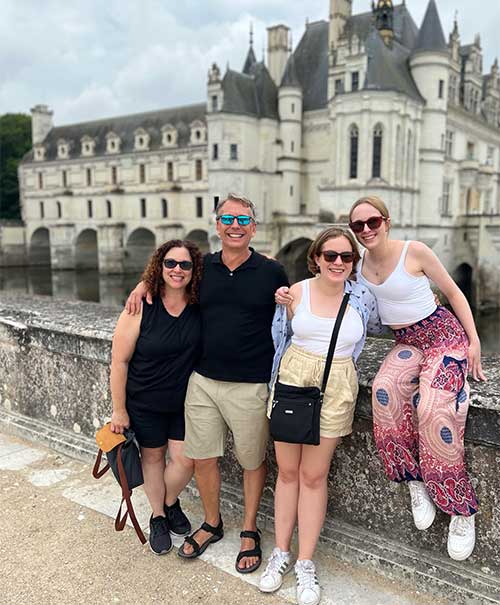
Family vacation. Waking up with the whole day ahead of me without a care in the world. Riding mountain bikes in the Swiss Alps, snorkeling in Hawaii, exploring Paris, swimming in Lake Michigan — it doesn’t really matter as long as I am with the ones I love.
Join Narrative Mindworks
Be part of a global community advancing the power of storytelling in healthcare, education, business, and the arts.
Whether you're a caregiver, educator, writer, or visual storyteller, narrative practices help us connect, heal, and preserve legacy. Join Narrative Mindworks to gain access to exclusive resources, share your story, and grow your impact.
Become A Member – Join Now