
Generation S.O.S. brings young people together through honest stories of struggle and recovery. Mary Beth Sammons explores how founder Robin Aviv and student Emma-Rose Mouret-de Lichana are helping those conversations reach others.
SNAPSHOT STORY
By Mary Beth Sammons
Emma-Rose Mouret-de Lichana had spent years keeping her struggles to herself.
"I've always felt very isolated," she says. "I didn't feel comfortable talking to a lot of people about my own mental health issues. I was worried people would see me as different, say that I was overreacting, or say that I didn't actually have the issues that I had."
Then, a little over a year ago, Generation S.O.S. came to her school, the Lycée Français de New York. Two young adults, George and Niti, stood in front of the students and told their own stories of struggle and recovery.
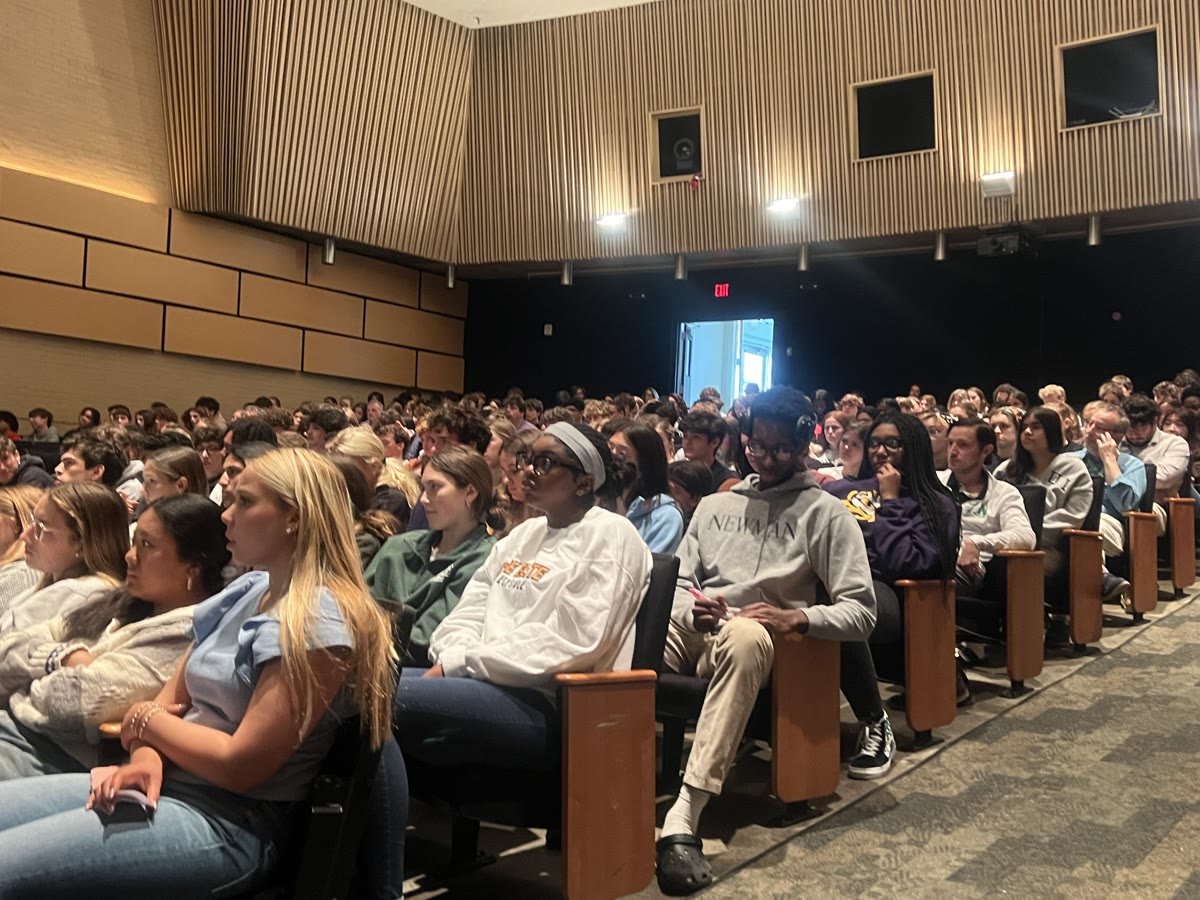
Emma knew right away that something was different. "I knew that there was something so special about what Generation S.O.S. was doing," she says: using peer-to-peer connection and people's own stories "to create a sense of trust and understanding." She heard it in the questions her classmates asked afterward. "I don't think that it's the kind of questions that you can get through your usual substance abuse lecture."
Within a year, Emma-Rose, the student who had hidden her story, was telling it to an audience of 600.
Emma-Rose’s story is far from rare. In the 2023 Youth Risk Behavior Survey from the Centers for Disease Control and Prevention (CDC), among U.S. high school students:
- 40% (about 4 in 10) reported persistent feelings of sadness or hopelessness.
- 20% (about 1 in 5) seriously considered attempting suicide.
- 9% attempted suicide during the previous year.
A separate federal survey from the Health Resources and Services Administration found that in 2023, about 5.3 million adolescents ages 12 to 17, roughly 1 in 5, had a current, diagnosed mental or behavioral health condition such as anxiety, depression or behavior problems.
Enter Generation S.O.S.
S.O.S. stands for "Sharing Our Stories," and the name is the method. The nonprofit, founded by New Yorker Robin Aviv, who is now 33 years in recovery, sends sober young adults into schools. They tell the whole truth: how a mental health struggle led to substance misuse, how it spiraled, and how they got help. Then they take questions from their peers.
The approach is one narrative medicine practitioners will recognize. A story told by someone close in age can reach a teenager in a way a statistic or a warning cannot. When listeners hear their own feelings in someone else's story, the isolation starts to break.
"Nothing like storytelling," Robin says, "especially about lived experiences."
This year Generation S.O.S. expects to reach about 200,000 young people in person, in hundreds of schools and college campuses across the country. Everything it does is free. "We never want money to get in the way of us being able to help someone," Robin says.
Six deaths and a living room
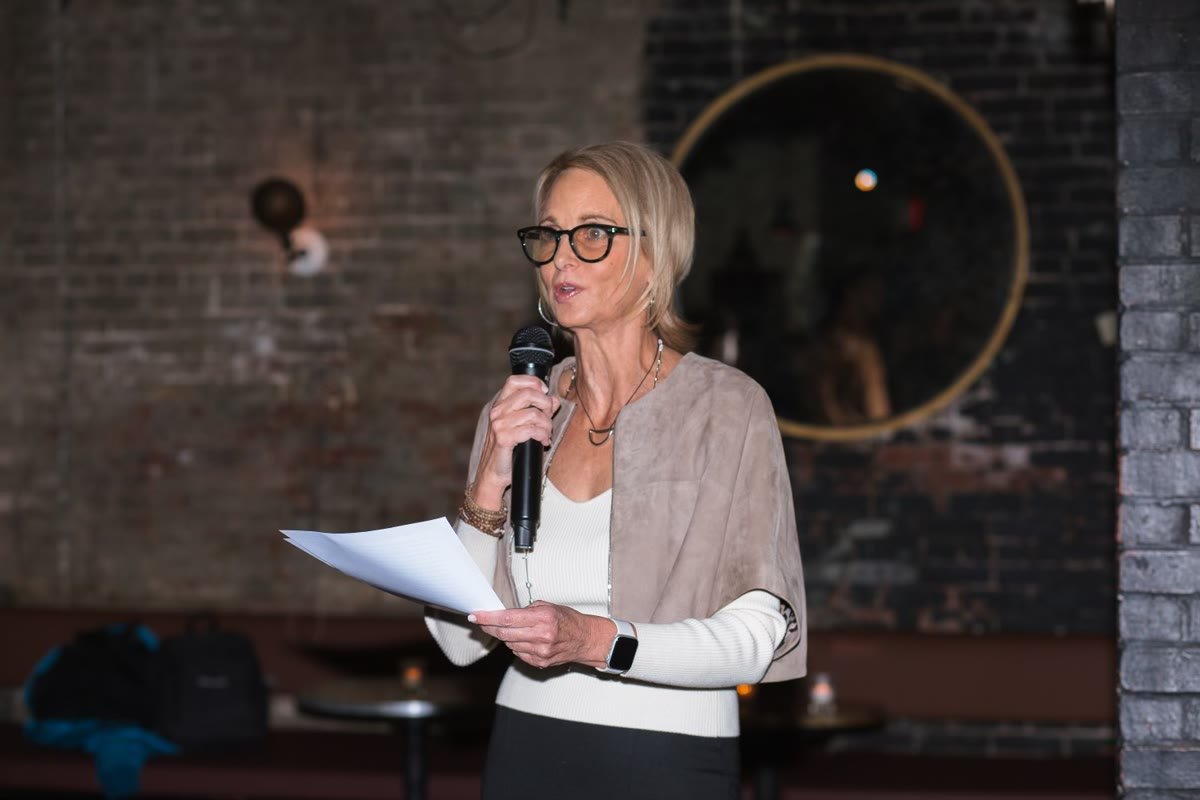
Generation S.O.S. began about a decade ago, after six overdoses occurred in three months in Robin's New York City school community; six kids died.
"Not one school did anything in response to it," she says. "And it wasn't because they didn't want to. They just didn't know how to." OxyContin had just hit the neighborhoods; fentanyl had not yet arrived. "These were great kids. They just did the wrong combination that night, because they didn't know."
Robin had just finished a term as PTA president at one of the schools. She was sure she could persuade them to make room for the conversation. They didn't want to hear it. "Everyone was scared," she says. As she later told NY1, "Kids were dying. And nobody was talking about it."
So she started talking herself, in her own living room on the Upper East Side. She invited a young man she had met through her recovery to share his story. Her three then-teenage kids brought their friends, she brought some parents, and 50 people crowded in.
His story began long before the first drink or drug. "It started with the feelings in middle school," Robin says. "It started with the feeling less than. It started with the not feeling smart enough." Then came a sports injury and a doctor's prescription for OxyContin. "You could have heard a pin drop in the room. The kids were just mesmerized."
The speaker ended with how he got sober and the coping skills that keep him from reaching for "the quick fix." Then the kids asked questions they would never put to a parent or a teacher. "It's only because he shared his deepest, darkest secrets that they were willing now to open up," Robin says.
The meetings moved to other living rooms in New York, then to Miami. There, a student took the idea back to school and started a club. That was the first school. Today Generation S.O.S. usually launches with an assembly, then students start a club so the conversation runs all year. "It is not a one and done," Robin says.
"Me too, me too, me too"
The healing happens in the listening. "When the speaker's talking, or when somebody's asking a question, they're all going ‘me too, me too, me too,’" Robin says. "It's beautiful to see this unfold."
Shy students may not speak up at first. Then they watch their peers open up. "When they see the most popular kid in the class talk about how isolated and lonely they feel and insecure," Robin says, "it just gets everybody talking." At the school assembly events, the faculty and administration are there during the Q&A. It is usually at the club level that the faculty may leave during the Q&A.
Honesty runs both ways. Generation S.O.S. works in prevention, not abstinence.
"Kids are going to do what they're going to do, and the moment you tell them no, you lose everybody in the audience," Robin says. Speakers are frank about the risks, especially fentanyl. "You don't have to be a drug addict to die of fentanyl," she says. "You could try something once."
The stories reach well past substances: sexual assault, eating disorders, bullying, online gaming, social media, isolation and loneliness. One speaker described spending whole days chasing the perfect post, his outlook ruled by how many likes he got.
Every audience leaves with a list of coping strategies: meditation, journaling, talking to a friend, breaking a big problem into small steps. The strategy speakers stress most is asking for help. "Many of us grew up in an environment where it was looked at as a weakness," Robin says. "Our speakers leave the audiences knowing that asking for help is the bravest thing they can do."
“A problem shared is a problem halved.”
Robin Aviv, founder of Generation S.O.S.
"Your story's my story"
For years, Robin kept her own story in a separate box. "I was very separate with my two lives," she says: work, school and parenting on one side, recovery on the other. Starting Generation S.O.S. changed that. "It made me sort of come out about my own journey, and it's been really, really wonderful for me to be able to be open about my experience."
Her story, like her first speaker's, started in school. Her two older siblings were straight-A students; she was in remedial classes. Her mother had her tested, which schools didn't do then, and learned she was dyslexic. "She was so happy that I wasn't stupid, I was just dyslexic," Robin says. So she sent her right back to a competitive school "with no support, no nothing." That struggle, Robin says, played into why she began using substances.
Years later, after Robin shared that story at a women's AA meeting, a young woman came up to her. "Oh my god," she said, "your story's my story." She is now one of Generation S.O.S.'s speakers. When she spoke recently at an Upper West Side school, student after student responded to her story of feeling "less than." Robin says, "You don't even have to have a learning disorder" to feel it.
Robin's own family helped build the organization. Her daughter Caleigh, in 10th grade at the start, helped shape how to speak to her age group. Her son Blake started the first New York City school club. Her daughter Nikki brought Generation S.O.S. to UCLA, part of a fast-growing college program. Jim Hood partnered in the effort and serves as the organization's CEO, dedicating himself to the cause after losing his son, Austin, to an accidental overdose.
From listener to storyteller
Generation S.O.S. grows when listeners become storytellers, and Emma-Rose is one of them. "Through Generation S.O.S. I learned to speak up about my own issues instead of hiding from them," she says.
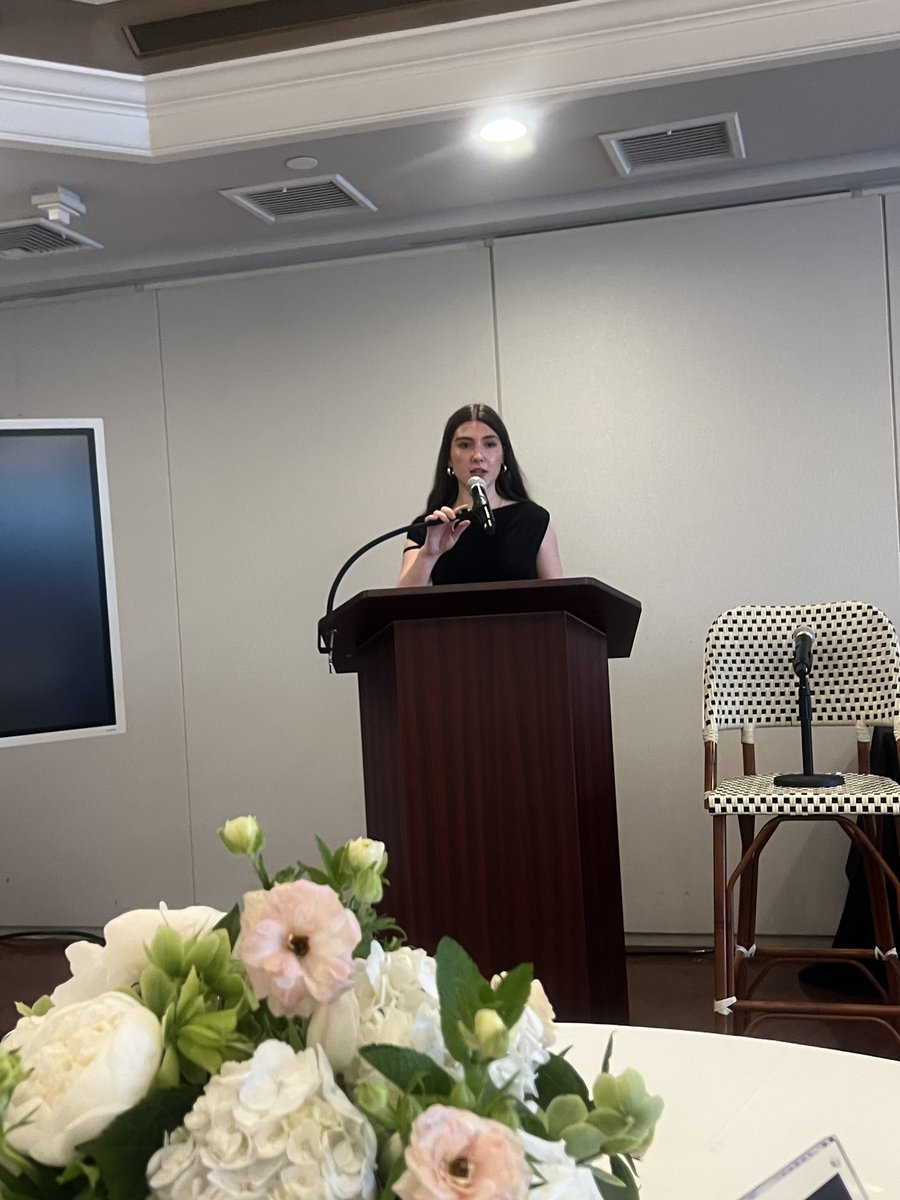
She told her story to 140 people at its first corporate event, with AllianceBernstein, and then to 600 people at the organization's summer benefit.
"That's where I really, for the first time, put myself out there, shared my story, and made myself very vulnerable to people that I didn't know," she says. "It is so rewarding to know that what you're doing can actually help change someone else's life."
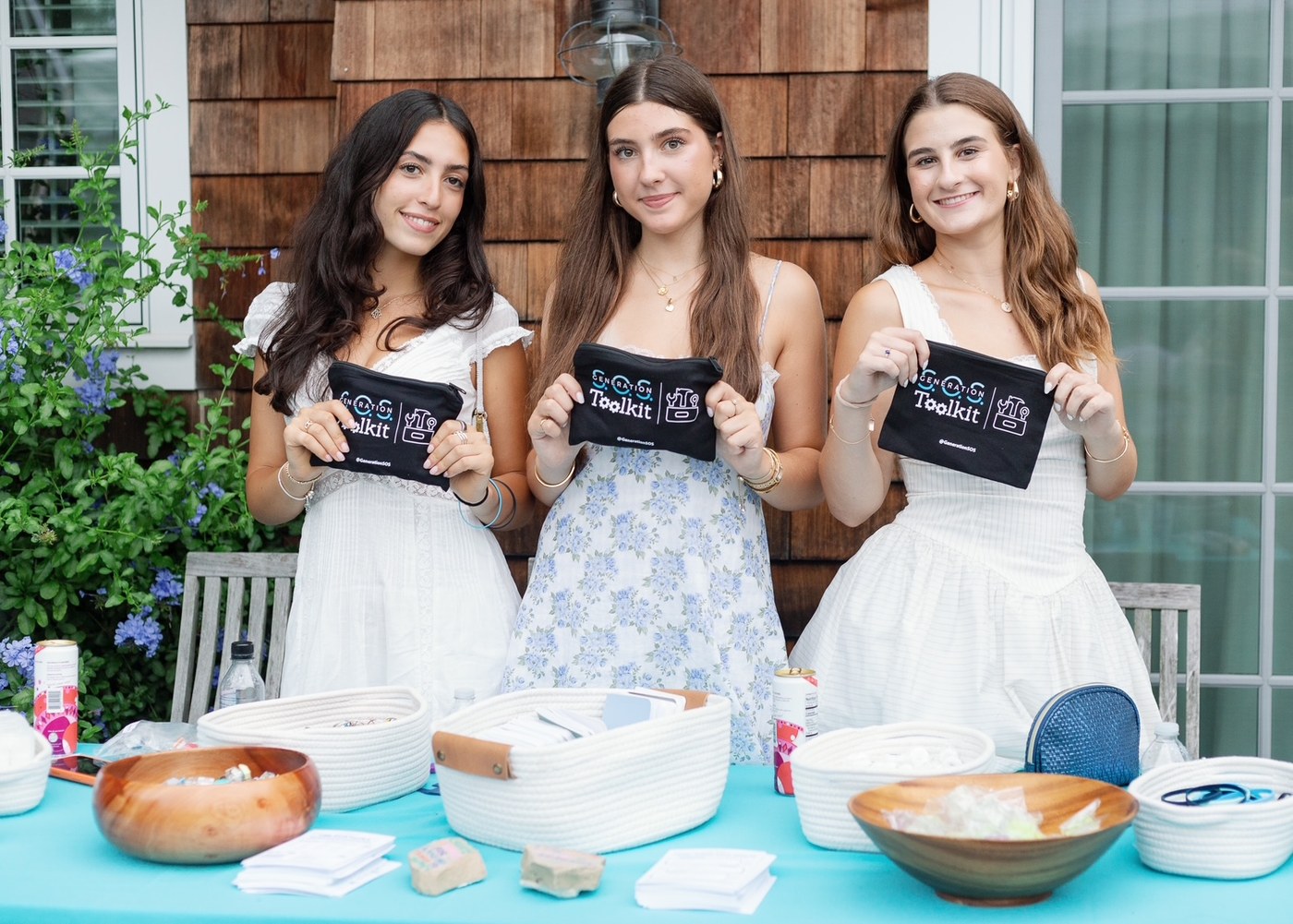
This past summer Emma-Rose led a group of interns who designed distress tolerance toolkits, based on a tool from dialectical behavior therapy. Each is a small pouch, filled with whatever calms you or brings you joy. Hers holds sour candies, whose strong taste can pull the mind out of a moment of high stress. "Everyone in life deals with a little bit of stress," she says. "That stress accumulates very quickly, and preventing it should be a priority."
At school, she keeps bringing the speakers back: on November 3 for the eighth and ninth grades, and later for the sophomores, juniors and seniors. Her goal is the one Robin started with in her living room. "People need to be less afraid to speak up about it," Emma-Rose says. "People need to be less ashamed of having gone through something."
She has a word to describe what it does for people who speak: cathartic. "It's very cathartic to be a part of an organization where you're surrounded by people who understand," she says. "It's really an opportunity for the speakers, but also for the audience."
Generation S.O.S. goes wherever there are young people: public and private schools, after-school programs, college campuses, and Indigenous communities. It rarely gets adopted by someone writing to principals; rather, it gets in through one connection, often a student, a parent, a teacher or an alum.
Or a student like Emma-Rose, who once feared being seen as different. Now she stands at the front of the room so someone in the audience can hear her story and think “me too.”
How to learn more or get involved
Visit generationsos.org to learn more.
Join Narrative Mindworks
Be part of a global community advancing the power of storytelling in healthcare, education, business, and the arts.
Whether you're a caregiver, educator, writer, or visual storyteller, narrative practices help us connect, heal, and preserve legacy. Join Narrative Mindworks to gain access to exclusive resources, share your story, and grow your impact.
Become a Member