When Katrina (Kate) Pugh is called in to handle thorny issues – downsizing, isolation, and the intersection of AI and business strategy – in the workplace, her Columbia University classroom or the community at large, she begins as she always does, mulling it over with a conversation.
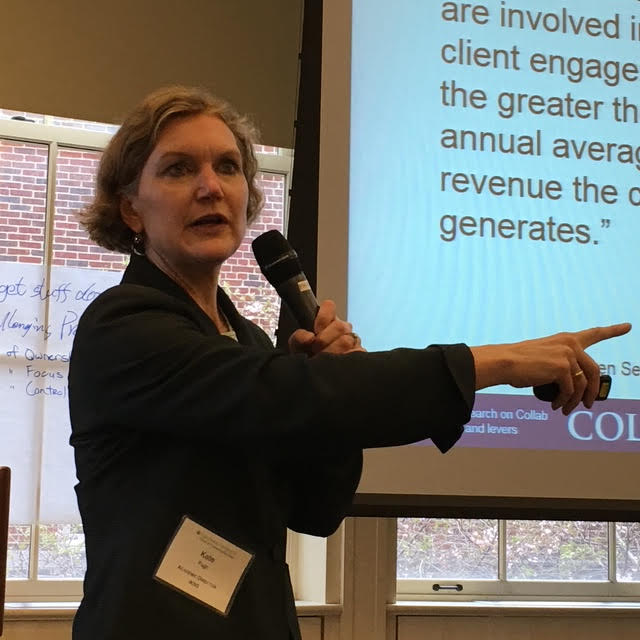
In her innovative “Conversations for Civility” gatherings, participants are invited to explore disagreement not as conflict but as a shared search for meaning. Around that table, stories are designed to inform, inspire and guide connection.
“Stories and curiosity are the place where transformation begins, “ says Kate, president of AlignConsulting and a lecturer for Columbia’s Information & Knowledge Strategy Master’s Program. She adds that stories are a way “to heal disconnection and generate collective wisdom.”
At the heart of Kate’s work lies a radical proposition: that knowledge is co-created, not transmitted, and that storytelling is the medium through which this co-creation flourishes.
As a systems thinker and narrative practitioner, she sees her role as both journalist and storyteller—documenting lived experience while shaping it into shared understanding. Like a journalist, she listens for nuance and truth; like a storyteller, she weaves fragments into coherence, revealing how our personal narratives intersect with collective ones.
How AI Is Revolutionizing Knowledge Management in the Workplace
There’s no question the swift integration of artificial intelligence is at the forefront of transforming the modern workplace, especially within the realm of knowledge management. As AI continues to evolve, Kate (who dubs herself an AI strategist) and her peers help companies explore how they are adopting AI through collective knowledge.
“It’s a matter of inquiry and advocacy combined,” she says.
Kate and her colleagues brought AI into conversation. In the article, “Knowledge Managers Bring Collectivity, Nostalgia, and Selectivity to AI,” she and her co-authors explored how knowledge managers (aka “KM’ers”) can intervene successfully with collective sense-making, example-selection, and a creative AI discernment. In the article, Kate and her co-authors say that the skills of KM’ers “are ever more important today.”
The article states: “A reader might think that we’re disparaging AI, as it may dampen creativity, noting that AI tend(s) to short-circuit our self-expression and devalue or preempt human-human interaction. On the contrary, we find that knowledge managers can successfully craft a partnership with AI. AI cannot substitute for our collectivity, nostalgia, and selectivity, but it can bring scale, reach, and speed. The onus is on us to continue to invest in AI and ourselves working together.”
Conversations Matter
Kate’s path to narrative work began long before the term was fashionable. With degrees from Williams College and MIT Sloan, she built her early career in consulting and knowledge management—roles at Oliver Wyman, PwC/IBM, Intel, and Fidelity Investments. But amid these data-driven environments, she recognized that the real breakthroughs didn’t happen in reports; they happened in conversation. Her breakthrough idea, captured in her book Sharing Hidden Know-How, was that organizations could design for this kind of dialogue. Her “Knowledge Jam” method has become a blueprint for how structured conversation can make the invisible visible—turning isolated expertise into shared intelligence.
— Katrina (Kate) Pugh
Through her Conversations for Civility, she invites teams to move beyond data exchange to combine listening, curiosity and openness to move beyond disagreement with empathy and respect —skills increasingly vital in an era defined by polarization and digital noise. People come together across ideological, professional, and cultural boundaries to “practice dialogue as a discipline of respect, listening, and learning,” she says.
“Civility,” she said, “is not politeness. It’s the courage to stay in the room with difference long enough for new meaning to form.”
At Columbia, she has brought this into the classroom, teaching The Science of Communities and Networks. She tries to inspire students to see organizations not as static hierarchies, but as living story systems—dynamic networks of voices continuously shaping each other.
Beyond academia, Kate continues to apply narrative intelligence to global challenges. As founder of Align, she advises organizations on strategy and conversation-capacity building interventions.
As a partner in Weaving Futures, she brings communities together to craft stories of sustainability, innovation, and resilience. Across these efforts runs a single conviction: storytelling is not just communication—it is social technology, capable of bridging disciplines, cultures, and ideologies.
In all of her endeavors, Kate brings rigor and grace to the spaces she holds, blending the precision of a systems thinker with the compassion of a storyteller. She models what we at Narrative Mindworks call narrative intelligence—the art of translating complex data, relationships, and human experiences into shared meaning.
Narrative Mindworks Questionnaire
1. What is your idea of perfect happiness?
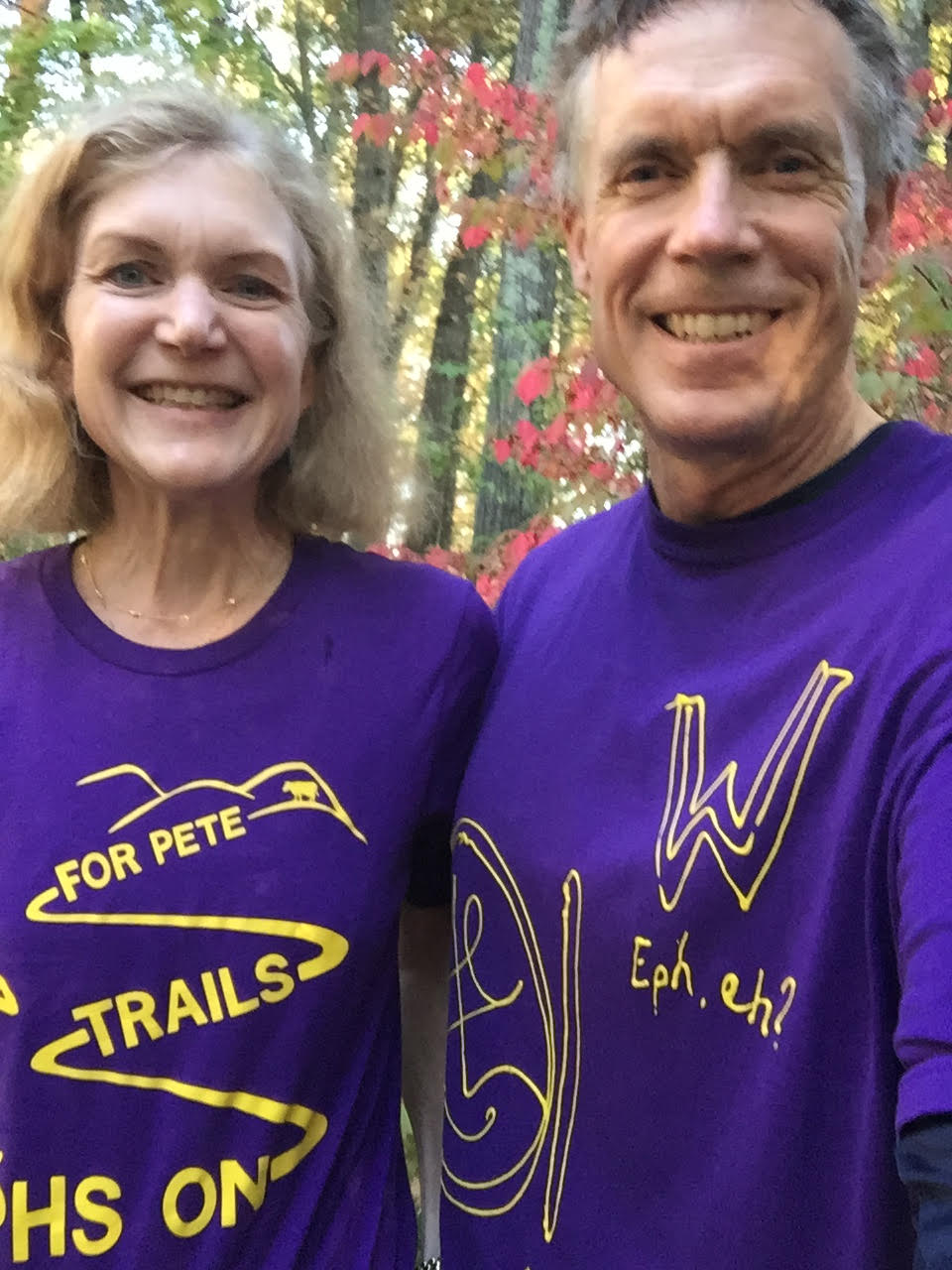
Being in nature with my fiancé, Peter. We met running in the Berkshires when I was only 18, and each time we are in nature, It is like a reunion!
2. Which living person do you most admire?
Nancy Dixon, who is a dialogue practitioner, knowledge leader, and author of Common Knowledge among many books. She has repeatedly inspired me – not only for her generosity as a mentor and collaborator, but also for her unflappable re-invention, empathy and fearless experimentation with technology.
3. What do you consider your greatest achievement?
My greatest achievement is trying again. That’s not one achievement – it’s more of a way of being. I have failed at everything -- from jobs, relationships, death of friends, badly formed writing, ill-designed collaborations, and even my favorite sport, running. But I persevere: I change my running gait, I listen harder, I cry a bit, and I sit in awe of others’ compassion.
4. Who are your favorite writers?
I admire all of the writers who take complex subjects and bring them down to earth. For example: Amy Edmondson (on psychological safety, kindness, failure). Ethan Mollick (on AI, collaboration, human agency). Larry Prusak (on knowledge and knowing). And, of course, Nancy Dixon (on speaking up).
5. Describe yourself in six words.
Collaborative. Energetic. Curious. Thorough. Grateful. Stubborn.
6. What are you most grateful for?
Having the courage to trust others, even though my fear. And, thus, for my true communities of curious, compassionate and intelligent friends.
7. What’s next on your bucket list?
Go to Australia and see the Red Rock, Uluru.
Join Narrative Mindworks
Be part of a global community advancing the power of storytelling in healthcare, education, business, and the arts.
Whether you're a caregiver, educator, writer, or visual storyteller, narrative practices help us connect, heal, and preserve legacy. Join Narrative Mindworks to gain access to exclusive resources, share your story, and grow your impact.
Become A Member – Join Now