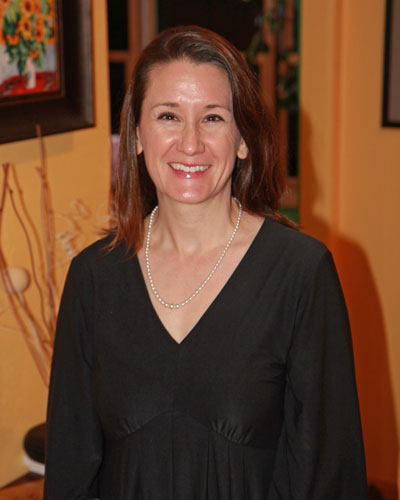
 Dr. Jennifer Frank remembers the day a woman showed up for her first appointment.
As Dr. Frank entered the exam room, the woman stated: “I’m ready for hospice.”
“It took me back, thinking ‘did I miss something,” the Neenah, WI family physician recalls, remembering briefly perusing the patient’s electronic medical chart prior to the examination.
The patient was sixty-eight-years-old, hardly a chronological “elderly,” age, but saying she was struggling with kidney and heart issues, says Dr. Frank , a family physician for Advocate Health. Her health records showed the woman had an early stage of chronic kidney disease and mild heart failure.
She told me no further treatment was available and said, ‘My kidneys and heart are failing. I’m ready.”
Dr. Frank put down the chart and listened further to the woman’s story. “What I heard was that she was saying ‘I am failing. My health is failing. I can’t do this anymore. Now my body is failing me.”
A-ha, Dr. Frank remembers thinking. “I discovered her why – the why she was seeking hospice and how she viewed her health”
The Truth Line: Getting to the Heart of the Patient’s Story
This moment crystallized something Dr. Frank had been absorbing throughout her years in medicine: that listening to patients' stories, finding out what gives their life meaning, what frightens them, and what brings them joy, requires listening and hearing beyond the surface.
The “why” is what Dr. Frank refers to as a patient’s “truth line.”
The “truth line,” a phrase coined by Ellen Kort, Wisconsin’s first poet laureate. Every poem, she believed, contains one line that reveals the heart of the piece, the line that—once uncovered—makes everything else fall into place. “In medicine,” Dr. Frank says, “our patients have truth lines, too,” she adds.
“What was happening was she was stating her truth line that she no longer was vibrant and she was starting to fail,” says Dr. Frank. “Her medical condition was real but the severity and giving up wasn’t as much about anatomy or lab values, but about an inner poetry.”
— Dr. Jennifer Frank
Just Listen: Practicing Narrative Medicine
Dr. Frank suggests that the most basic and powerful way to connect with her patients is to listen. Just listen. Listen to what they say. Care about what they say.
“A loving and empathetic silence often has more power to heal and to connect than any prescription,” she says.
Her approach underscores the growing movement of narrative medicine, which teaches doctors and other caregivers "sensitive interviewing skills" and the art of "radical listening" to improve patient care. An estimated 80% of medical schools in the United States now teach some form of narrative medicine, representing a remarkable shift from what was once a niche practice to mainstream medical education. The goal is to make medicine more human-centered by focusing on four key relationships: between patient and caregiver, caregiver and self, caregiver and colleagues, and caregiver and society.
Dr. Frank and other experts say the impact is profound for both patients and caregivers. For patients, telling their story helps them cope with illness, reconstruct coherence in the face of disruption, and regain identity and meaning. “For healthcare providers, narrative medicine reduces burnout, increases empathy, and deepens understanding of the emotional aspects of disease on our lives,” she says.
She describes an 86-year-old woman who arrived after finding a large breast mass. The woman’s first words weren’t about pain or duration or size. They were about memory:
“I don’t want to die like my mother did.”
Another patient, a 57-year-old man with diabetes and kidney failure, held fast to a single hope:
“I need to make it to the Brewers’ opening day. I’ve gone every year for twenty-five years.”
She came to see that every patient’s story has a center of gravity, a single sentence that reframes everything else.
The 86-year-old woman who arrived after discovering a breast mass did not begin with her symptoms. She began with her mother:
“I don’t want to die like my mother did. She had the same thing, and they couldn’t help her.”
“Her truth line was not the tumor,” says Dr. Frank. “ It was the memory of loss and the fear of reliving it.”
Then there was the 57-year-old baseball fan whose diabetes had slowly eroded his kidneys. He sat across from her, exhausted from numbers and charts, but clear in his one wish: “I just need to make it to opening day. I’ve been there every year for twenty-five years.”
“His truth line was loyalty—to tradition, to joy, to the life he had built despite illness,” she says.
And she recalls the 41-year-old mother of three who heard the word “cancer” and immediately looked past lab results and staging and treatment plans. “Will I be there for my kids as they grow up? Her truth line was love, sharpened by fear.”
A Practice Rooted in Stories
 Family medicine is sometimes described as the front porch of American healthcare: the place where injuries, fears, diagnoses and relationships all pass through. Dr. Frank, 52, who attended Boston University School of Medicine, has long believed that this proximity affords a view of something deeper than disease. She came of age in a medical system that rewards speed and quantifiable outcomes. But she felt early on that something essential was being left behind.
“It’s easier to measure blood pressure than fear,” she says. “But fear is still part of the disease. I discovered compassion is best built through stories.”
She began writing in the late evenings after clinic, first as an outlet, then as practice. Her early essays—spare, emotional, observant—circulated in small journals. She earned a modest following among physicians who recognized themselves in her reflections: the exhaustion of caring deeply, the loneliness of making impossible decisions, the quiet grief of bearing witness.
She started her writing after completing her medical residency training where she found it healing to write about her experiences with patients. In 2015, her first novel, Getting It Right the Second Time Around, was published. Since then, she has continued to publish narrative medicine pieces in a variety of journals. For about a decade, she blogged on work-life balance for Physicians Practice website. She is currently working on a novel about pregnancy loss. Her book titled The Physician Leader’s Playbook will be published in March.
On her LinkedIn she describes herself as more than a family practitioner: Physician Leader, Health Care Innovator, Writer, Blogger, Passionate Advocate for Patients. She’s also a wife, mother of four, voracious reader and a writer. She also was a Digital Health Fellow for Doximity. Visit Dr. Frank’s website here.
Earlier this year, she presented a workshop, “Narrative Medicine,” focusing on the power of storytelling to heal—and her own passion for fiction writing—at a workshop for Write On, Door County—a literary center nestled in the Woods of the Door County peninsula in Wisconsin. Dr. Frank was the recipient of one of the Write On residency awards. She also presented the same talk recently to the Advocate Narrative Medicine Group, a national organization based in Park Ridge.
Writing Inspiration
Dr. Frank’s writing is inspired by her “literary hero,” author Lisa Genova , The New York Times Bestselling Author, Neuroscientist, Speaker, Empathy Warrior. One of her books, Still Alice, is as compelling novel that helps readers gain an understanding of those affected by early-onset Alzheimer’s and remain moved and inspired long after you have put it down.
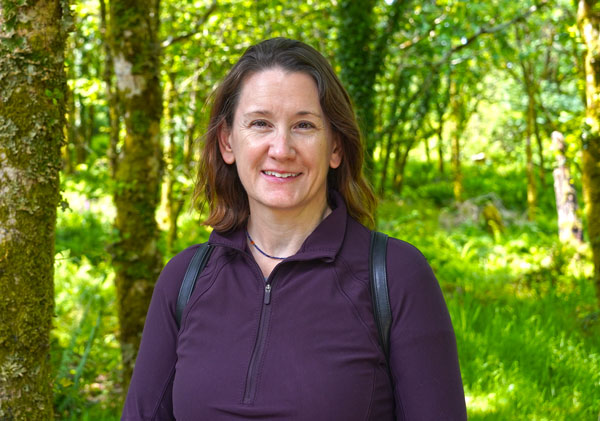
“I realized at one point how powerful it was for me to put pen to paper,” says Dr. Frank.
Escape to HuHot by Jennifer Frank
Hunched, shriveled, pinched
Enclosed in the metal prison of the wheelchair
You long to be free, unencumbered
By the oxygen tube connecting you to life

Each visit with me brings worse news
Creatinine up, red cells down
Carbon dioxide rising, oxygen falling
You have a medication deficiency

Once you were adventurous
Living life on the edge
For your generation,
You defied expectation

Now you are ending like
Everyone Else.
Hospital-home-hospital-rehab
Home-hospital-nursing home
Death is next

Your passions now are distilled into
Shopping at Walmart
Lunch at HuHot Mongolian Grill
I have never been

While I recite the monotony
End-of-life care
Advise hospice
Encourage compliance
Lecture about smoking
Offering nothing you want or desire

I imagine
Casting off the tubes
Tossing the meds
Lifting you from the prison-chair
Offering you my arm
As we escape to HuHot

Pulse: Voices From the Heart of Medicine, 11/11/11
Join Narrative Mindworks
Be part of a global community advancing the power of storytelling in healthcare, education, business, and the arts.
Whether you're a caregiver, educator, writer, or visual storyteller, narrative practices help us connect, heal, and preserve legacy. Join Narrative Mindworks to gain access to exclusive resources, share your story, and grow your impact.
Become A Member – Join Now