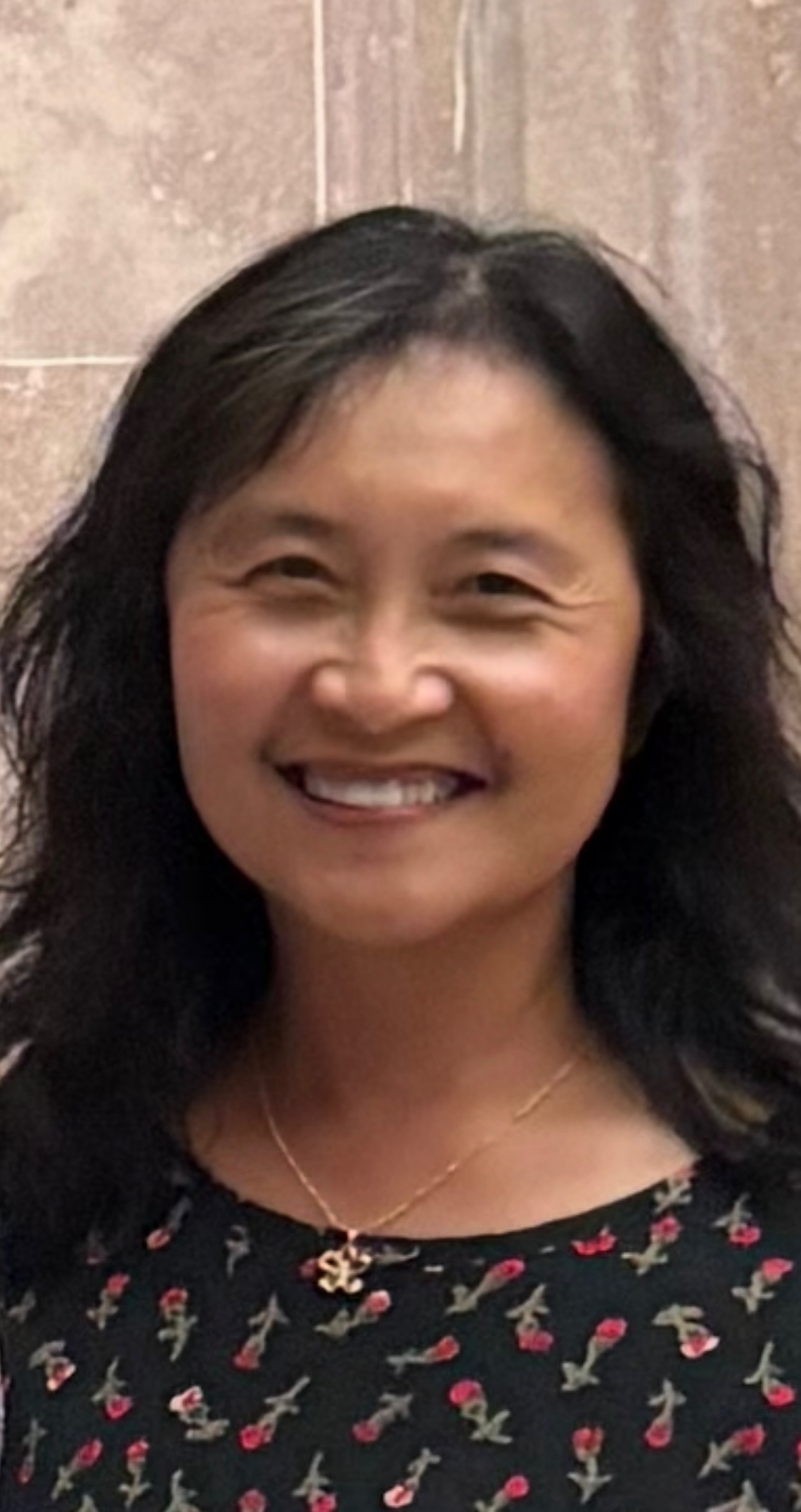
By Dr. Easter Chiu
A New York physician specializing in Pediatrics
At the times when life keeps coming at her, she feels she is reeling and off balance, yearning for when life will be normal again. And she realizes that she is again and again . . . living the new normal.
She sings to him a song heard from her childhood, a song she had not fully understood because it was in Mandarin, a different language from the English that she dreamed in or the Cantonese that she spoke to bridge the world of the past, unchanging, held in her parents’ hearts.
But she understood the word ai, when, as a daughter, she received love from her mother and father, and as jiejie, big sister, she gave love to her younger siblings.
She stood between two worlds: no one had walked the road ahead of her; she built the road from sheer force of will, becoming the engineer of her own fate.
She finds him under the bright-eyed gaze of the Pallas Athena* of Morningside Heights and holds on tightly to his hand.
She learns to make the pastitsio and golden lemon potatoes of his childhood; whole lamb roasts laboriously turned by hand on a spit over coals in the backyard for Greek Easter, shared through the years.
She learns that the song is called “The Moon Represents My Heart.”
And just how great my love is
My affection does not waver
And my love does not change
The moon represents my heart. . . .”
In the hospital room, she sings to him:
“You ask how deeply I love you
And just how great my love is
My affection does not waver
And my love does not change
The moon represents my heart. . . .”
A treasured friend plays the viola and loving friends and family sing this song, joining her, reinforcing her resolve to lift his spirit, which had fallen so low.
She had drawn them all close together, from near and far, to give him strength when he felt empty, and his heart is filled again.
Strains of music float from his hospital room and fill the air with voices in song, an enchanted moment suspended in memory and time.
At home, she struggles with the Hoyer lift to transfer him from the hospital bed (wherein he lies, near the window, so that he can still be kissed by the sun of the of the new Spring) to his wheelchair.
It is his birthday and they are embarking on their journey to the Pagoda in the park, nestled in the heart of Baltimore, framed by cherry blossoms and magnolias.
A victory.
Just months earlier he was unable to sit upright, aspirating, struggling to breathe, frozen.
The other day he seized longer and more often than before.
She calls their neuro-oncologist, he answers, apologizing that it took so long to respond: he is in Germany managing the care of his own father in the hospital.
The last time she had called, he called back: he was away with his family on Spring Break.
She is so grateful for the pure kindness of their neuro-oncologist, her terrible fear is acknowledged and allayed.
Emerging from the fog of his seizures, her beloved says, “I need to time my seizures with his next vacation.”
They laugh together.
Today there is another surgery.
While he sleeps, she slips time to celebrate two young friends at the threshold of a new life together.
She watches as the groom comes riding on a white horse, bedecked in garlands of blooms, and offers his hand to his bride; his bride takes his hand, intricately woven lines of henna hold a hidden message and a promise.
She remembers when, years ago, she held his hand and danced the Kalamatianos, a traditional Greek dance, in her vermillion gown, and she is filled with joy.
She sits by his side as he lies in the hospital bed and waits for him to awaken.
She girds herself for tomorrow and tomorrow, for she knows there will be more battles to be lost and won.
She embraces this new normal as she embraces him.
Author's Note
This piece was written for my sister. I bear witness as she takes on her role as caregiver to her husband, who has a malignant brain tumor.
They met as undergraduates at the Columbia School of Engineering, and spent many an hour, hands interlaced, on the steps under the statue of Athena* in the “Academic Acropolis of New York.”
With hands joined they later danced the Kalamatianos, the Greek wedding dance, while she wore her vermillion cheongsam, her Chinese wedding gown.
Like Athena carrying her shield, my sister is a warrior; she fights the caregiver’s battle for her husband, when he cannot.
* Pallas Athena, the statue that stands before Low Memorial Library at Columbia University.
Join Narrative Mindworks
Be part of a global community advancing the power of storytelling in healthcare, education, business, and the arts.
Whether you're a caregiver, educator, writer, or visual storyteller, narrative practices help us connect, heal, and preserve legacy. Join Narrative Mindworks to gain access to exclusive resources, share your story, and grow your impact.
Become A Member – Join Now