
Authors Rachel Weaver and Kimberly Warner joined 45 participants in Oregon for a Narrative Mindworks co-sponsored workshop exploring illness, uncertainty, and life beyond a tidy recovery story.
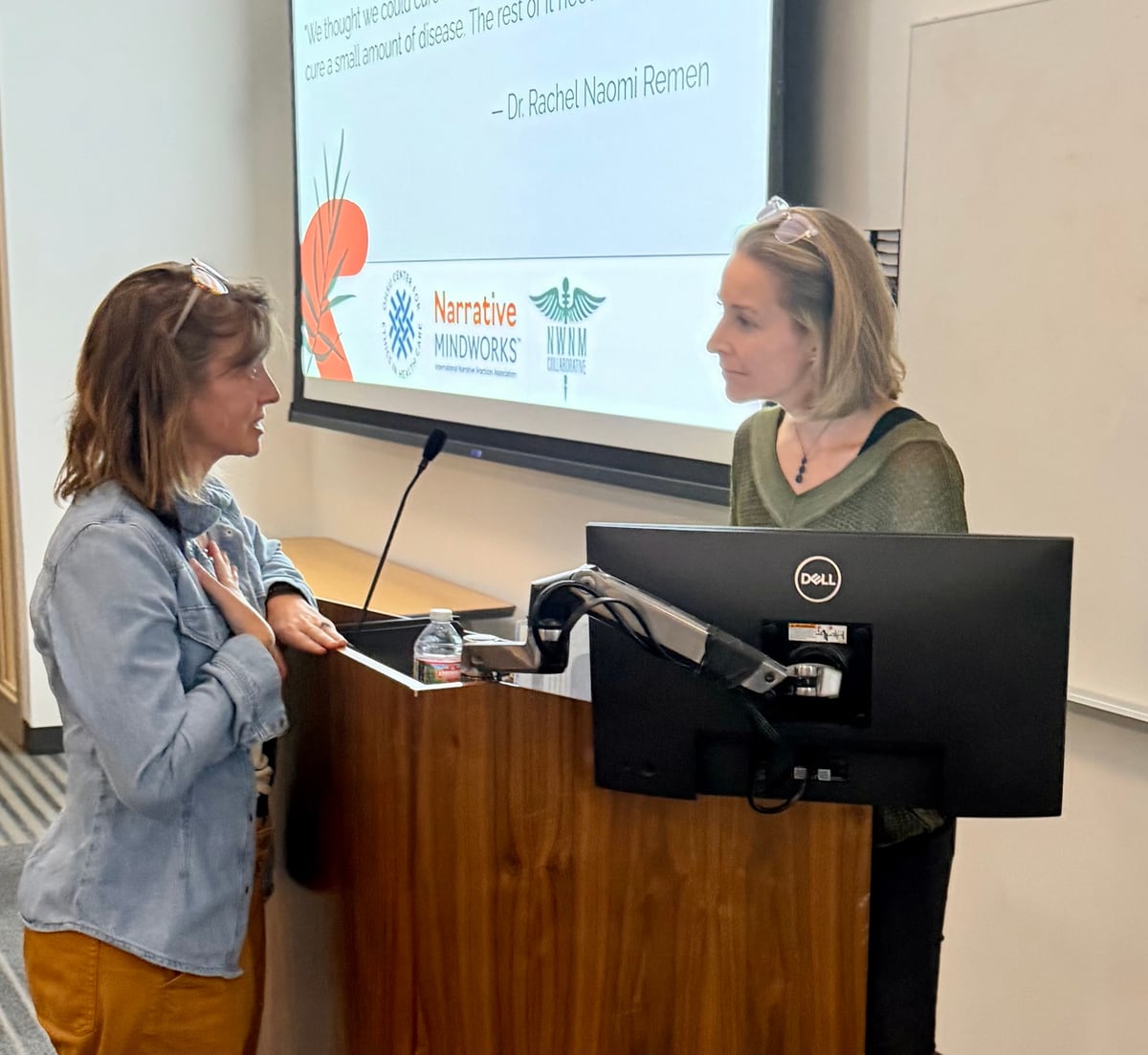
“I was well, I got ill, I’ll be well again.” This dominant, persistent and tidy health narrative oversimplifies illness as a temporary status, a journey from problem to solution. But what happens when there is no clear destination? And how do we make meaning when things get messy and we cannot make certainty? These questions were among those given the narrative treatment at an evening workshop on Thursday, Sept. 10th titled “The Dizzy and Unfixed Path: Narrative, Meaning, and Living Beyond the Cure Story.”
“Alright,” I said again, gathering up all the trust I had left in the world and placing it at the very center of myself. I would not accept that this was as good as it could get. I would keep searching for someone to help. I would do more than just survive. I would keep my head down, dig deep, and find a way to live anyway.”
Rachel Weaver, Dizzy
A Shared Space for Stories
The 90-minute interactive event, co-sponsored by New York-based Narrative Mindworks, the Portland-based Northwest Narrative Collaborative, and Oregon Health Sciences University, was a cross-country pilot workshop in what may become a series. Leaders from all three organizations welcomed the audience of 45 people to the Rood Family Pavilion, handing out journals, pens, bookmarks, and refreshments.
“Time can be the ultimate healer, at least in the more broad sense of healing—the kind of healing or ‘post-traumatic growth’ that may not cure bodies can sometimes heal spirits—a person becoming more virtuous, more brave, more connected because of illness or tragedy.”
Kimberly Warner, Unfixed
Derek McCracken (Narrative Mindworks Director of Marketing/Outreach), kicked off the evening with a call to collective action and an invitation for participants to engage in a short pair-and-share reflective writing exercise. Next, Alexis Rehrmann (Program Manager, Community Partnerships and Narrative Medicine at Lewis and Clark College) moderated a dialogue/discussion with Rachel Weaver and Kimberly Warner, who also read from their memoirs (Dizzy and Unfixed, respectively) to explore how narrative can become a practice of attention rather than certainty and help us remain present to lives that are still unfolding.
Alexis invited the authors to respond to a series of open-ended questions: “What do these passages reveal now – where are you now?”, “How has your understanding of hope changed?” and “What surprised you about writing from uncertainty?”
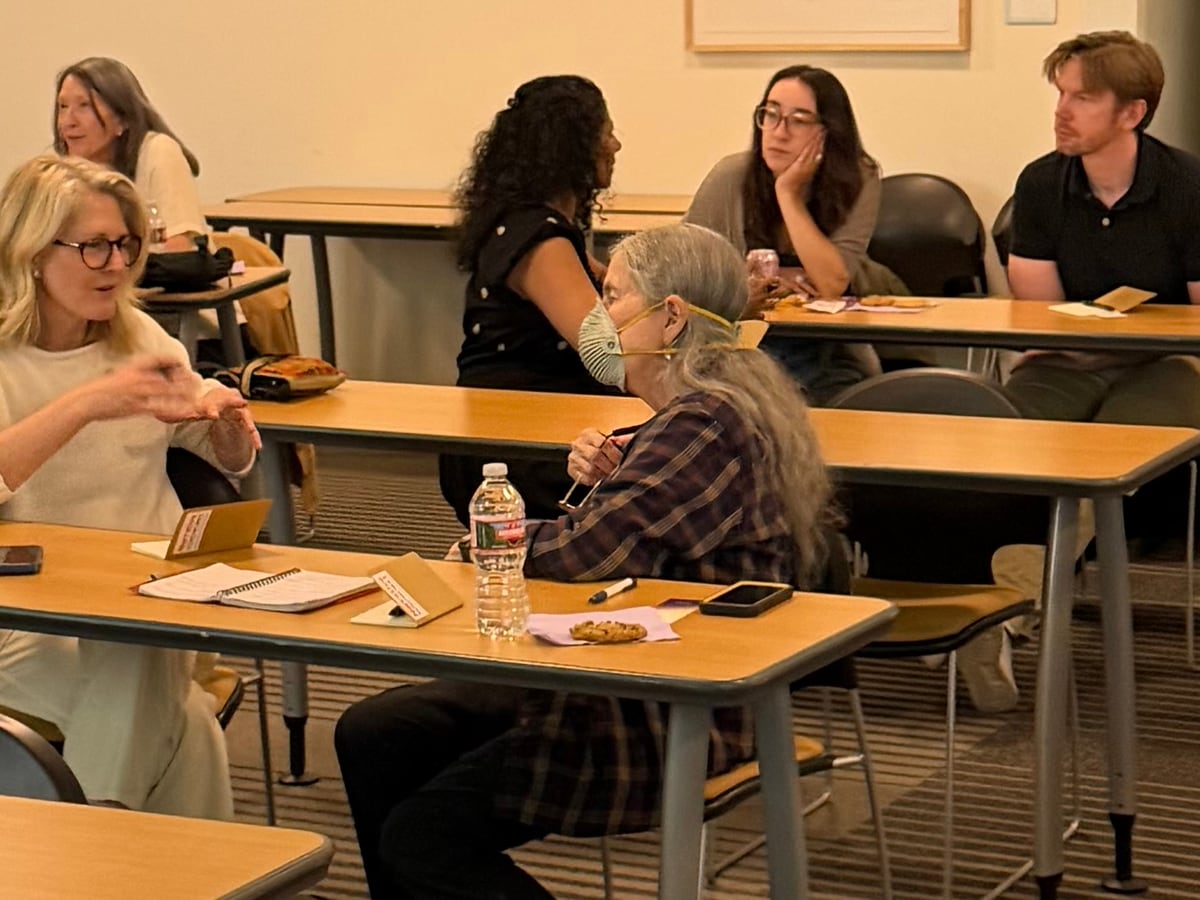
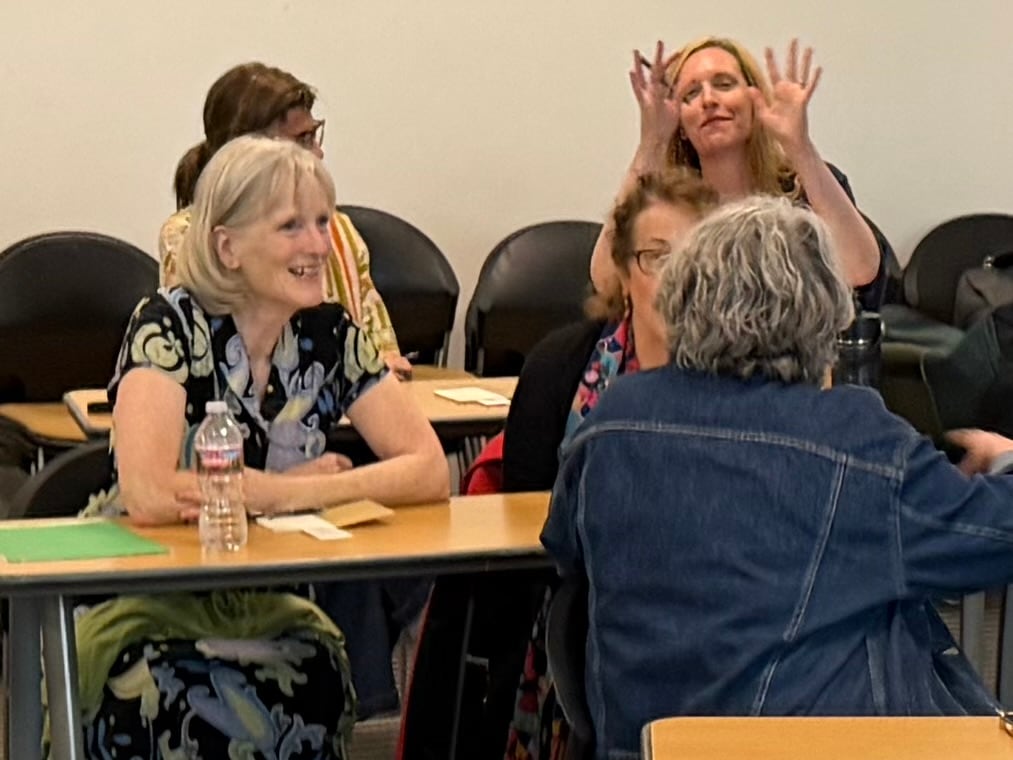
Making Room for Uncertainty
After a short break, Derek facilitated a reflective writing exercise and invited participants to share (or not) with a dyad partner what they wrote and what surprised them about the exercise. In the spirit of living with and in uncertainty, the final discussion culminated with questions rather than answers: What stories about illness have we inherited? Which ones no longer serve us? What practices help us remain attentive to uncertainty instead of rushing to closure?
To learn more about Northwest Narrative Collaborative, please visit nwnmcollaborative.org.
To propose an onsite or online collaborative workshop, please email Narrative Mindworks at
To order Dizzy or Unfixed, visit Bold Coffee & Books.
Join Narrative Mindworks
Be part of a global community advancing the power of storytelling in healthcare, education, business, and the arts.
Whether you're a caregiver, educator, writer, or visual storyteller, narrative practices help us connect, heal, and preserve legacy. Join Narrative Mindworks to gain access to exclusive resources, share your story, and grow your impact.
Become a Member