
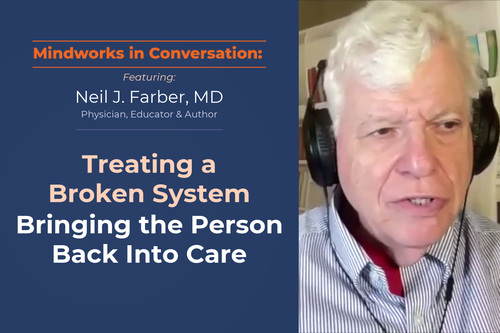
Physician and author Neil J. Farber joins Tony Errichetti to discuss how his experiences as a doctor, caregiver, and patient shaped his call for a more humane healthcare system, and why listening, curiosity, and time with patients matter.
Watch the full conversation on YouTube
In This Conversation
- What becoming a caregiver and patient taught Farber about feeling invisible in healthcare
- Why delivering difficult news requires more than medical knowledge
- How students can learn empathy through practice and the way they are treated
- Why Farber sees time pressure and administrative demands as central to physician burnout
- How curiosity and collaboration could help physicians, patients, and administrators better understand one another
Seeing Care from Both Sides
For Neil J. Farber, the problems in healthcare became personal long before he began writing Treating a Broken System: A Physician’s Cure for the Healthcare Crisis. When his wife was diagnosed with brain cancer, the way they received the news exposed a painful gap between medical expertise and human communication. That experience helped direct his work toward teaching and researching how clinicians deliver difficult news.
He also recalls sitting with his wife outside an appointment while physicians he knew walked past without recognizing him. As a caregiver, he felt invisible. Later, becoming a patient himself brought new experiences of dependence, difficulty accessing care, and accepting help from his family. These shifts in perspective deepened his interest in seeing the person beyond the patient role.
Teaching Empathy and Making Room for It
Farber describes how communication training has changed since his own medical school years. Yet better training, he argues, cannot accomplish everything if physicians lack the time and support to put it into practice.
He and Errichetti explore empathy as something students need to experience as well as practice. Supportive debriefing, thoughtful questions, and opportunities to learn with standardized patients can model the same attention clinicians are asked to offer their patients.
A System That Supports Listening
The conversation moves from individual encounters to the conditions that shape them. Farber challenges the idea that asking physicians to become more resilient is enough to address burnout. He argues for changes to workloads, administrative processes, and the relationship between clinicians and institutional leaders.
Curiosity runs through that discussion: toward patients whose lives extend beyond their diagnoses, toward students learning to care, and toward colleagues facing pressures that may be difficult to see. For clinicians, educators, caregivers, and anyone who has felt unheard in a medical encounter, the conversation asks what it would take to make that attention part of everyday care.
About the guest: Neil J. Farber, MD, is Professor Emeritus of Clinical Medicine at the University of California, San Diego. Learn more about his work and Treating a Broken System on his author website.
Join Narrative Mindworks
Be part of a global community advancing the power of storytelling in healthcare, education, business, and the arts.
Whether you're a caregiver, educator, writer, or visual storyteller, narrative practices help us connect, heal, and preserve legacy. Join Narrative Mindworks to gain access to resources, share your story, and grow your impact.
Become a Member: Join Now