
SNAPSHOT STORY
By Ellen Piligian, MSJ, CPA
Narrative Mindworks Senior Writer and Storyteller
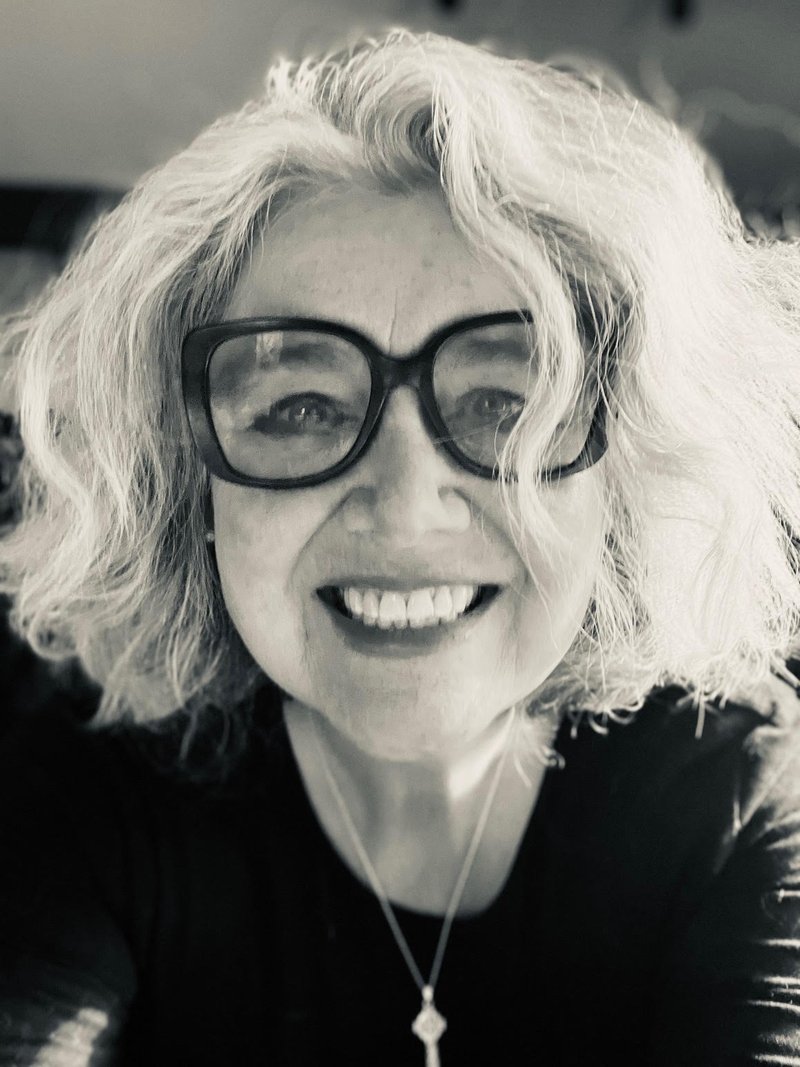
Laura Hope-Gill is passionate about stories and what they can do for us — heal our minds, bodies, and even our world.
An award-winning poet, she is the creator and program director of the Narrative Healthcare and Creative Writing MFA Program at Lenoir-Rhyne University in North Carolina. She is also a North Carolina Arts Council Fellow and the Poet Laureate of the Blue Ridge Parkway as well as an artist, improv pianist, and mother.
But get her talking about narrative approaches to healthcare and soon you are on a wild ride as she leads you through history, from the wisdom of Indigenous practices of oral storytelling, to how we lost our imagination as a culture, to figures and events that will take you back to high school history class.
She explains it all in elegant detail in her forthcoming book, Bee Bread: How the Hive of Story Listening and Telling Heals the World. Hope-Gill says we were led astray from trusting our innate creativity by two key figures, Emperor Constantine and Sir Isaac Newton — Constantine for limiting the scope of what we call Christianity, excising one version from a fluid, global conversation about spirit and matter; and Sir Isaac Newton for calling a “high silence” on his Royal Society colleague chemist Robert Boyle’s experiments and later on all alchemy, which was the central intellectual and spiritual topic of Britain and Europe along with the rest of the world. In severing alchemy from discourse, they devalued awareness of soul and introspection as vital processes of being human and forced us to disparage emotion and creativity.
With this, she draws on research in narrative medicine, expressive writing, and the ancient alchemy of storytelling to remind us that stories have the power to transform us.
The title, Bee Bread, pays homage to an Appalachian tradition of leaving a portion of the honeycomb in the hive for the bees to ensure the colony’s survival during lean times. It’s a metaphor for the stories we carry and share to sustain us through generations.
Hope-Gill has been following research on narrative medicine since 2013, when she found herself in a lecture hall filled with doctors and surgeons at the introductory and advanced training workshops in narrative medicine at Columbia University College of Physicians and Surgeons. Far from feeling like an outsider, she felt they were entering her world of close-reading and reflective writing sessions. It was the impetus to launch the Narrative Healthcare program that Fall at her university.
But Hope-Gill had been studying the creative process long before that. In 1990, as a college senior writing poetry and journaling extensively, she’d visit a giant oak tree every month behind her house in Winter Park, Florida, to pray that as long as she could receive poems, she would devote her life to whatever it wanted of her.
Years later, she discovered through her ancestral culture (the Druids, Celts, and Gaels) that the oak, in Gaelic, shares a connection with the word “door.”
“My journey is deeply personal,” says Hope-Gill. “It just happens to translate into a new field of medicine and academic study.”
Now with more than a thousand studies published on the work of narrative medicine, she says she’s even more certain of the power of narrative practices. Her own health challenges — she was diagnosed as deaf at age 31 and suffered a traumatic brain injury in 2022 — opened her to a world of disability, suffering, and creative imagination. This is according to From Stories to Science: Mapping Global Trends in Narrative Medicine Research.
“Storytelling is medicine,” she says. “Everything that is wrong in the world right now can be solved if we return to storytelling. We’re on the brink of extinction. Storytelling has brought us back from here before.”
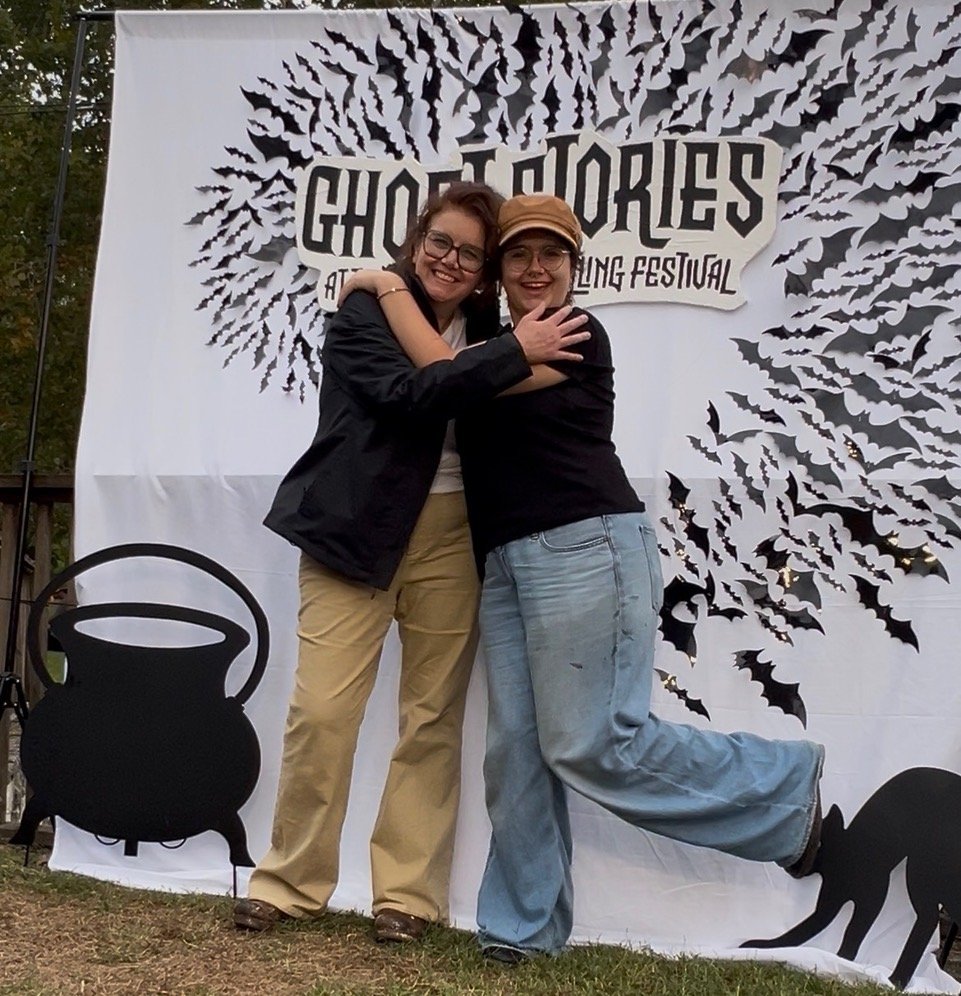
A conversation with Laura Hope-Gill
Describe narrative medicine to someone who’s never heard of it.
Narrative medicine is a newly recognized modality in clinical medical practice wherein stories not only matter, but clinical research shows they heal matter. It transforms medicine with storytelling. If you’ve experienced the difference between a doctor who makes you feel human and one who makes you feel like a problem, you have encountered narrative medicine. If you have ever felt better after telling someone your story, or healed a chronic illness by writing your story, then you have practiced it yourself.
What resistance have you witnessed?
It is much easier now than a decade ago. The pandemic showed us that sickness and story go together. Before that, our cognitive divide between subjectivity and science remained unquestioned since the 1700s. I was quite shocked by people’s — even writers’ reluctance to think that stories hold value beyond entertainment and teaching. Storytelling has transformed marketing, investment, fundraising, and operations in business.
Where challenges remain?
The language surrounding these projects treats the arts as a cute little sibling to medicine rather than its profound, eons-old grandparent from which we have so much to learn. Science sees culture as something it can use more than as something that successfully kept us alive, in balance with the planet, for longer than 50,000 years. Indigenous groups, poets, and storytellers know things that science now needs to humble itself and ask.
How did your traumatic brain injury impact you?
I slipped in my kitchen and landed on my occipital lobe, the part of the brain that determines what’s real or not. The initial concussion commuted into seven months of excruciating photophobia, which forced me to live in complete darkness. Without short-term memory, my reality reconstituted every 45 seconds or so. The TBI showed me what creative imagination is. Reality without the filter is pure chaos, and it’s fantastic. Intuition steps in.
What surprised you when you started the program in Narrative Healthcare?
I had to learn how to teach doctors, nurses, and surgeons to trust their creative imaginations. This brought me face to face with the divide in our education between STEM and Humanities approaches. The greatest obstacle is that we are told there is a divide between the psyche and the body. Give a prompt to creative writers, and you’ve opened a door everyone runs through. Give one to doctors who can lose their license for wrong answers, and you’ve just caused paralysis.
Share some joys of doing this work.
Watching doctors’ worlds stir to life. I am not exaggerating. They fall in love with writing, and with life after a long time of being beaten down by it. The best part is seeing how their writing practices improve their relationships with their families.
Can you share some stories?
I did a one-hour listening workshop with doctors one night, and a male surgeon said at the end, “I’m going to go home and listen to my wife. She won’t believe it’s me.” Another doctor told me he’s shared his writing with a group of other doctors, and now they’re all building a grotto in his yard and playing guitars. A world-renowned breast cancer surgeon who said, “I’ll write anything but a poem,” went on to get her MFA with a collection of poems about her many patients (disguising all details) and now teaches with me.
You remind me a bit of indigenous ecologist Robin Wall Kimmerer, whose book Braiding Sweetgrass calls for a return to a reciprocal relationship with nature versus our culture of consumption.
We are on the same team of inner knowledge and its tether between us and nature. Indigenousness is universal within us. It is buried under our insistence on intellect and something we erroneously call reason.
I see many people keeping hard stories private, and once they share, they are amazed they are not alone. Thoughts on that?
I begin each Narrative Healthcare course by asking students to tell their health story. They often cry as they say. Then they hear how deeply others relate to it. They won’t see themselves as alone again after this. The telling is the connection, and once they experience it, they are curious about what other stories they hold inside. If we never tell a story, we deny ourselves a necessity of being a person. We also deny others the possibility of not feeling so alone in their story.
Where should narrative practice be used now?
The government. We are living the price of the West’s cutting away stories and emotion three centuries ago. Narrative instills morality because we see the cause-and-effect and complexity of every little act, and it attunes us to the emotional impact of everything.
What do you want readers to learn from Bee Bread?
That our stories are valuable treasures and that they aren’t crazy for seeing beyond the five senses and connecting with nature and the world in mysterious ways. We can accept ourselves for being goofy, hurt, curious, a little grouchy, a whole lot of humans. We don’t need a bajillion follower or to influence anybody or be influenced. Everything we need is within and among us.
Please share some favorite poets.
In America, Joy Harjo, Cornelius Eady, and Mildred Barya. Each is wide open to the transformative lift-off of language and surrenders to where the poem leads. Beyond the U.S., I follow Mohammed Moussa from Gaza, who lost his entire family in this genocide. Also, Mahmoud Darwish, Taha Mohammed Ali, Raul Zurita, Valzhyna Mort, Safia Elhillo, Okot p'Bitek, and Alexis Kagame. They all have my heart.
Three fantasy guests at a dinner party?
Sir Isaac Newton, for how he was into alchemy until 1645, then silenced it apparently in return for a seat in Parliament.
Emily Dickinson. I hope she’ll accept me into her soul’s society.
Harriet Tubman. I’d listen to her every word. I wouldn’t ask anything of her at all.
Learn more about Laura Hope-Gill and her book: www.laurahopegill.com
For more on her Narrative Healthcare program: https://www.lr.edu/narrative-healthcare-certificate
Join Narrative Mindworks
Be part of a global community advancing the power of storytelling in healthcare, education, business, and the arts.
Whether you're a caregiver, educator, writer, or visual storyteller, narrative practices help us connect, heal, and preserve legacy. Join Narrative Mindworks to gain access to exclusive resources, share your story, and grow your impact.
Become a Member